
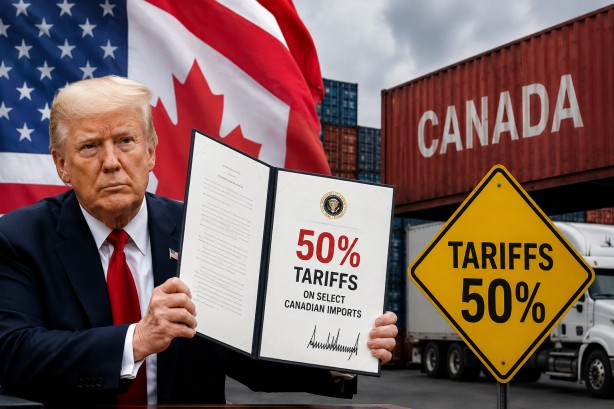
The Trump administration has instituted a new set of 50% tariffs on certain goods imported from Canada, a decision justified by President Donald Trump as a response to what he considers unfair treatment of American products by Canadian trade policies. The tariffs specifically target sectors such as automotive materials, dairy products, and alcoholic beverages.
These measures have been enacted through a series of executive orders, even as trade negotiations continue under the framework of the United States-Mexico-Canada Agreement (USMCA). The administration asserts that the tariffs aim to rectify perceived imbalances and protect U.S. industries from what it calls discriminatory Canadian trade practices.
The introduction of these tariffs is poised to exert additional pressure on the ongoing trade talks between Washington and Ottawa. The U.S. government’s move is seen as an attempt to leverage negotiations in favor of American market access, which remains a contentious point in discussions with Canada.
As these tariffs come into effect, there is considerable concern about the potential repercussions on economic relations between the two nations. Businesses and exporters on both sides of the border are closely monitoring the situation for Canada’s response, which could have significant ramifications for trade dynamics across North America.