
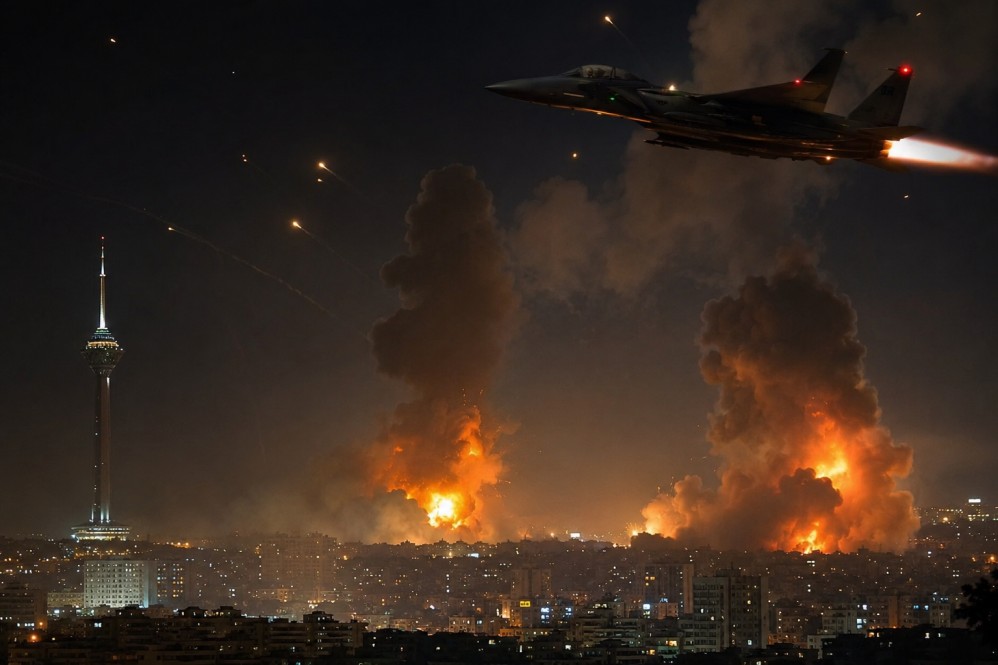
The United States has launched its third consecutive night of airstrikes targeting Iran, with President Donald Trump announcing a maritime blockade and a 20% tariff on cargo transiting the Strait of Hormuz under U.S. security oversight. The U.S. Central Command stated that these strikes are intended to diminish Iran’s military capabilities and prevent attacks on commercial vessels and civilians in this vital waterway.
President Trump confirmed that military actions against Iran would persist, emphasizing the U.S.’s commitment to maintaining security control over the strait. This decision comes after reports emerged of two UAE oil tankers being hit by Iranian cruise missiles in Omani waters, resulting in the death of an Indian crew member and injuries to several others. The heightened tensions have caused Brent crude oil prices to surge nearly 8%, raising concerns over global energy supply stability.
Iran has denounced the proposed blockade, accusing the U.S. of jeopardizing international energy security. Tehran has warned that any efforts to limit its maritime access will be met with a strong response. Moreover, international maritime authorities have pointed out that imposing mandatory transit fees in international waterways lacks legal backing under current international law.
The escalation of military activities in the region has sparked fears of a broader conflict, with ongoing attacks disrupting shipping operations, pushing oil prices higher, and injecting further uncertainty into the global economy. The situation highlights the potential for a significant regional crisis, impacting not only the involved countries but also the international community.