
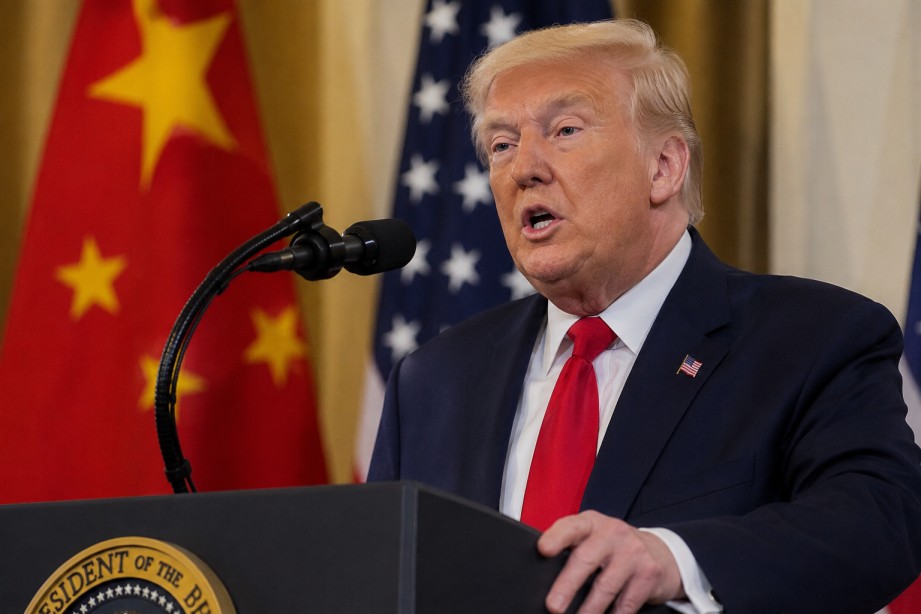
In a renewed assertion of election interference claims, US President Donald Trump has accused China of meddling in the 2020 presidential election. He announced the declassification of related intelligence documents and tasked federal agencies with probing what he termed as concealed vulnerabilities in election security. During a televised speech, Trump expressed concerns about the integrity of the US electoral system and directed the Department of Justice, FBI, CIA, and the Office of the Director of National Intelligence to scrutinize the management of intelligence concerning the 2020 election. He also called on Congress to enact more stringent voter identification laws.
Democratic leaders swiftly dismissed Trump’s allegations, emphasizing that numerous investigations, intelligence agencies, courts, audits, and recounts have consistently found no evidence that foreign interference impacted the election’s outcome. Critics argue that Trump’s claims are an effort to sow doubt about the electoral process ahead of the impending congressional midterm elections.
In response to the accusations, China firmly denied any interference, reaffirming its policy of non-interference in the domestic affairs of other nations. This stance aligns with a US intelligence assessment released in 2021, which concluded that no foreign power, including China, tampered with the technical aspects of the 2020 US voting process.
The ongoing debate over election integrity continues to polarize the political landscape, with Trump’s assertions of foreign involvement meeting fierce opposition from those who insist on the robustness of the electoral system. As the midterm elections approach, these claims could further influence public perception and trust in the democratic process.